2025-07-02
Stable Food Waste Figures in Supermarkets, Focus Shifts to Further Innovation
Tags
Photo source: Photobac, Shutterstock.com
Veghel, July 2nd, 2025 – For the first time, food waste levels in Dutch supermarkets have plateaued. Compared to the initial measurement in 2018, waste is still down by 33%, maintaining retail as the sector with the most significant reduction in food waste.
These results come from the annual research initiated by the foundation Samen Tegen Voedselverspilling (Food Waste Free United) and the Dutch Food Retail Association (CBL), funded by the Ministry of Agriculture (LVVN). The study was carried out by Wageningen University & Research (WUR) based on self-reported data from supermarkets.
Still Work to Be Done
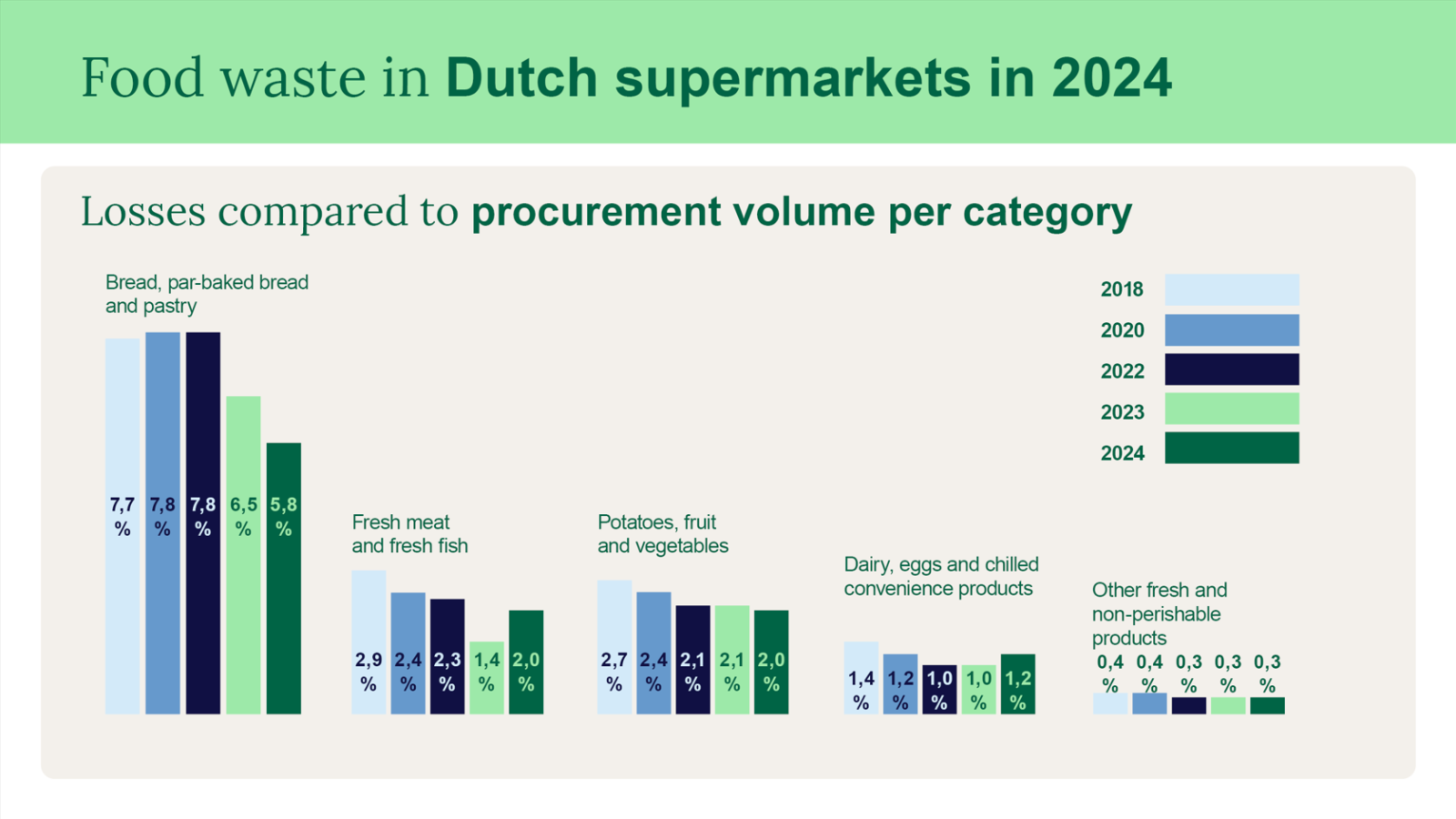
The stagnation in this year’s reduction is partly due to improved data quality. The data is now more precise, resulting in better insights. While bread waste has further declined, meat waste has increased slightly compared to 2023. In total, food waste amounted to 0.92% of purchase volume in 2024, up from 0.89% in 2023. The figures suggest that most of the “low-hanging fruit” has already been picked.
Toine Timmermans, director of Samen Tegen Voedselverspilling, explains: “Supermarkets have worked hard to reduce food waste through strategies like dynamic markdowns close to expiry dates, offering day-old bread, smarter ordering, and extending the shelf life of fresh products. This has led to impressive results year after year. But this year’s findings show it’s becoming more challenging. The relatively easy steps have been taken—now we need to find more complex and innovative solutions to continue making impact.”
Meat Waste Has the Greatest Impact
Meat waste rose slightly compared to 2023. However, last year saw an exceptionally sharp decline, so the current figures follow a more logical trend since 2018. CBL director Marc Jansen says: “We are pleased that supermarket food waste remains well below 1%. We want to treat food with care. Since meat production has a relatively high environmental footprint, it’s especially wasteful when meat is lost. That’s why supermarkets pay close attention to meat purchasing and inventory management. We hope and expect to see that reflected positively in next year’s figures.”
Joint Efforts to Reduce Bread Waste
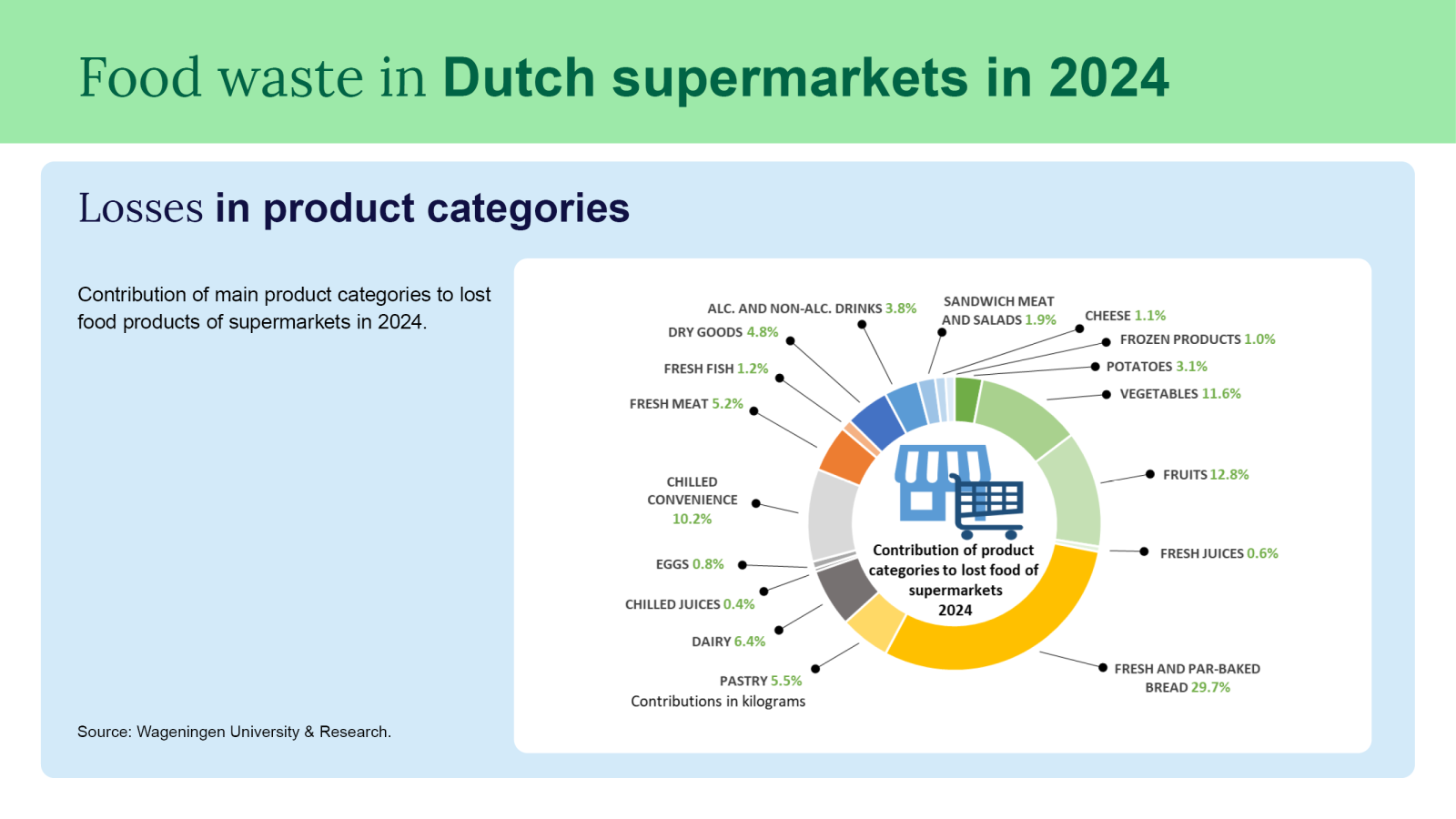
Supermarkets have focused for years on better selling-through of bread, resulting in a 16% decrease in bread waste compared to 2023—an encouraging development. However, despite this significant reduction, bread remains the category with the highest absolute losses. About one-third of supermarket food waste comes from the bakery section, making it the area with the most potential gains (in kilos).
Timmermans sees an opportunity here for further reduction: “But how can we achieve that? Retailers will need to make solid agreements—among themselves and with their bread suppliers. We must work together to find more sustainable and waste-free solutions.”
Online Grocery Retail
Eleven companies participated in the monitor: Albert Heijn, Aldi, DekaMarkt, Dirk, Hoogvliet (new), Jumbo, Lidl, Plus, online supermarkets Picnic and Crisp (new), and meal box provider HelloFresh. Together, these retailers represent about 90% of the market.
Thanks to the participation of online players Picnic, Crisp, and HelloFresh—along with the online figures from one of the regular supermarkets—the research now provides a clear picture of food waste in online retail. The waste figures in the online segment are significantly lower.