
2026-06-18
Date-labelling icons are helpful, but attention must be paid to the best-before date
Tags
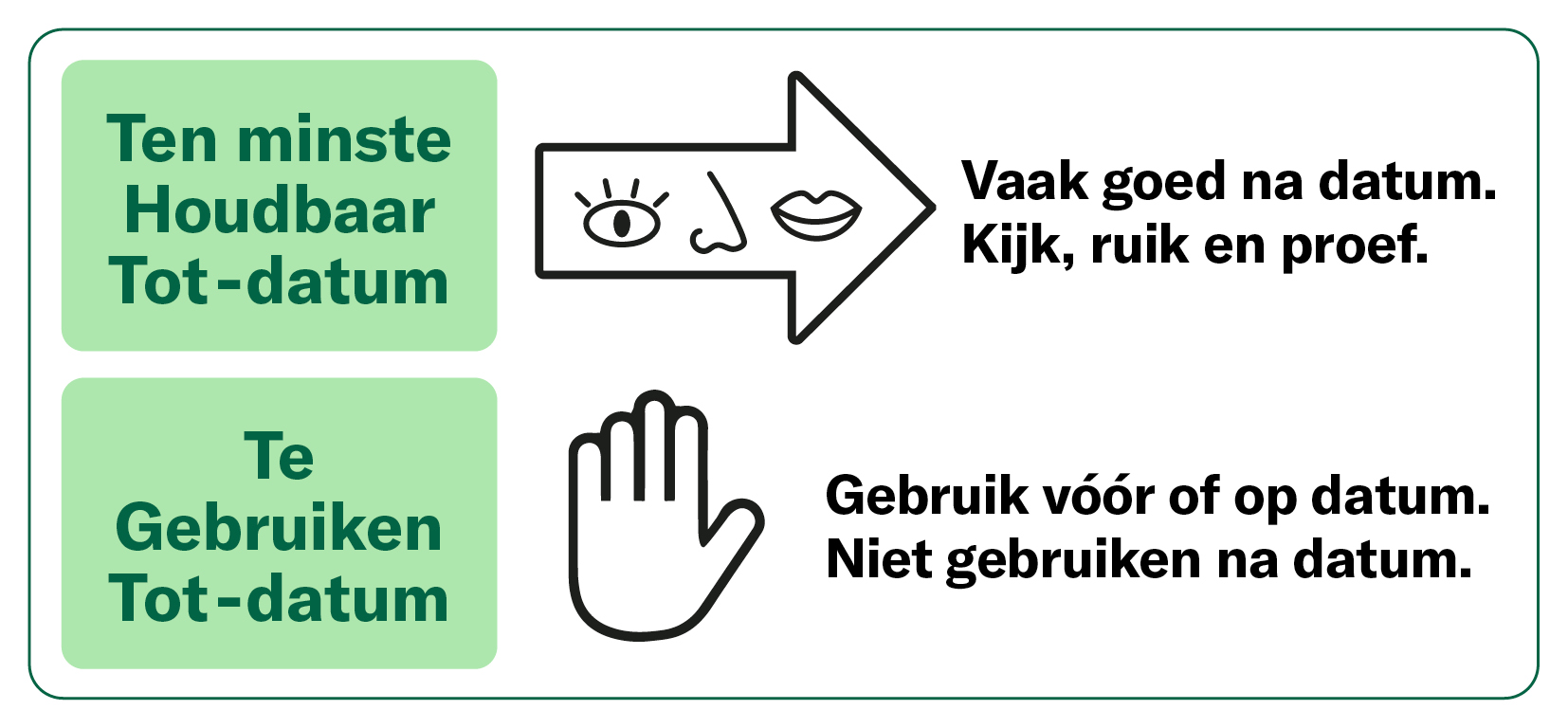
In 2025, over 1 billion products carrying shelf-life icons were present in Dutch kitchens and refrigerators. This is evident from the reporting by members of the Date Labelling Coalition. The latest consumer data from the Netherlands Nutrition Centre (Voedingscentrum) show that food waste continues to decline and that a majority of consumers look, smell and taste products after the best-before date has passed. However, the distinction between the best-before date and the use-by date remains unclear for many consumers.
In the Netherlands, 1.6 billion kilograms of edible food are wasted every year. Approximately one-third of this waste occurs at the consumer level. An estimated 10% of food waste in households is related to date labels. For this reason, the Date Labelling Coalition was launched two years ago today at the initiative of Samen Tegen Voedselverspilling (Food Waste Free United), whose members clarify date labels through icons on product packaging.
Toine Timmermans, Director of Samen Tegen Voedselverspilling, said: “The fact that over 1 billion products now carry date labelling icons demonstrates that the sector is making progress together. More consumers are looking, smelling and tasting products after the best-before date has passed, helping to prevent unnecessary food waste.”
Lilou van Lieshout, Sustainability Expert at the Netherlands Nutrition Centre, added: “The best-before date is a quality guarantee. Looking, smelling and tasting helps consumers assess whether a product is still suitable for consumption after that date. However, it is important that consumers understand the difference between the best-before date and the use-by date (typically found on fresh products such as pre-cut vegetables, fresh meat and fish) where the date is critical for food safety.”
Difference Between Best-Before and Use-By Dates Still Often Unclear
Research conducted by the Netherlands Nutrition Centre shows that fewer than half of Dutch consumers (45%) understand the difference between the two types of date labels. Consumers often rely on looking, smelling and tasting when assessing products with a use-by date, while products with a best-before date are sometimes discarded solely because the date has passed. Since a significant proportion of household food waste is related to date labels, substantial gains can still be made.
The Difference:
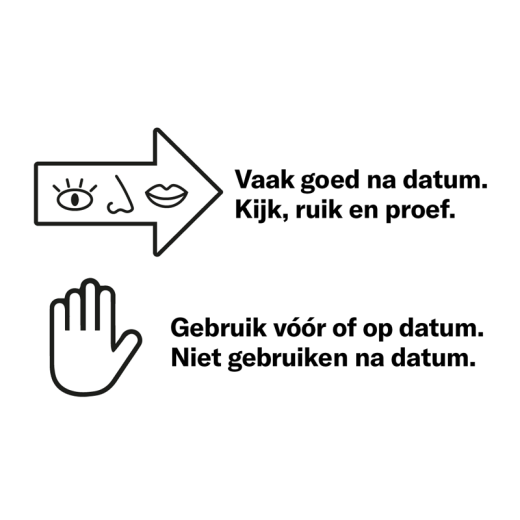
Best-before date
Relates to product quality.
Often still good after the date.
Look, smell and taste before deciding.
Use-by date
Relates to food safety.
Consume on or before the date.
Do not consume after the date.
One in twelve Dutch consumers immediately discards a product once its best-before date has passed. At the same time, 77% act correctly by looking, smelling and tasting first. The icons featuring an eye, nose and mouth can help reinforce this behaviour.
However, more than half of consumers (56%) also look, smell and taste products with a use-by date. In such products, harmful bacteria may grow after the date has passed. For these products, it is important to consume them no later than the indicated date, freeze them, or prepare them in advance. Once prepared, they can generally be kept for an additional two days in the refrigerator.
To prevent food waste while also ensuring food safety, it is therefore essential that consumers understand the difference between these two date labels.
Icons Appearing on More and More Products
Retailers and manufacturers participating in the Date Labelling Coalition aim to provide consumers with clearer information about the difference between the two date labels. This initiative has been co-funded by the European Union.
Coalition members have already added the icons to 10,000 unique products, with hundreds more being added each month, from supermarket private-label products to dairy and pasta products from leading national brands. In total, over 1 billion products featuring the clarified date labels are now in circulation.
Members of the Date Labelling Coalition have committed to placing the explanatory icons on at least 50% of their products. Toine Timmermans said: “Most participating organisations have already achieved this target, but continue to add the icons because of their importance. To create even greater impact, it is essential that the Date Labelling Coalition continues to grow with new members, and we are working hard to make that happen.”
(*) The coalition currently comprises Unilever, Albert Heijn, FrieslandCampina, Jumbo, Lidl, Dekamarkt, Dirk, Velder, Ebro, Enrico Foods, de Smaakspecialist, Grand’Italia, Danone, Uniekaas, Riedel and JEGG Future Farming, and is supported by Too Good To Go, FNLI, CBL, the Netherlands Nutrition Centre and the Ministry of Agriculture, Nature and Food Quality.