Project Clarify EU
Project summary
One of the ways companies in the foodsector can help consumers to waste less food is by clarifying date labels. The market study on date labelling and other information provided on food date labels and food waste prevention (EC; ICF e.a., jan. 2018) measured that around 10% of all food waste is related to uncertainty about date labels.
Food Waste Free United wants to act on this and therefore initiated a Date Labelling Coalition in which food producers, retailers and consumer organizations work together on clarifying date labels to consumers. The coalition was formalised on the 18th of June 2024 and parties agreed on:
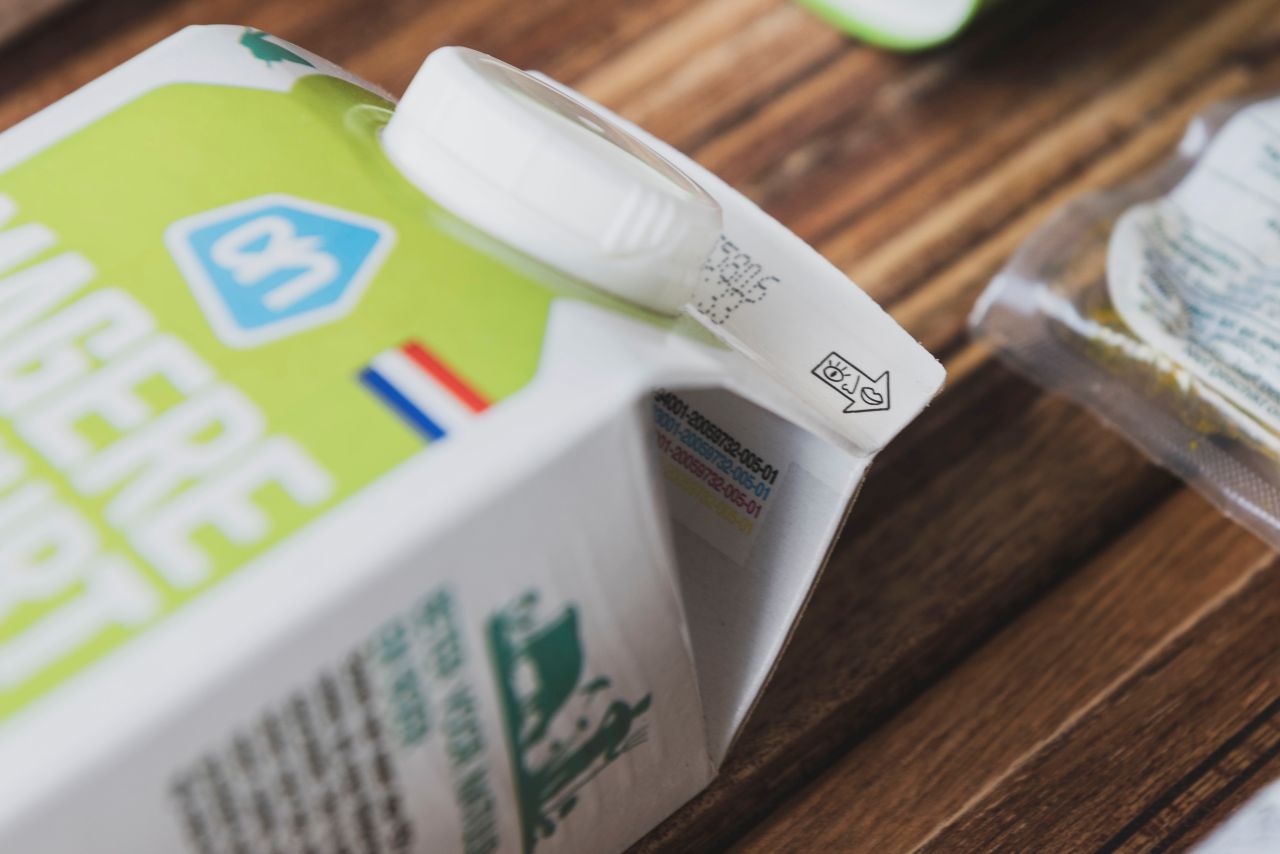
Including scientifically tested icons clarifying the Best Before and Use By dates on at least 50% of own brand products (before July 2027);
Sharing five consumer-oriented information messages a year about date labelling in the Netherlands through their own channels;
Not indicating a Best Before date on products where no expiry date is required (listed in Annex X) and make efforts to expand the list of exceptions under Annex X. FWFU, 5 Retailers (Albert Heijn, Jumbo, Lidl, Dekamarkt, Dirk), 6 food producers (Unilever, FrieslandCampina, Ebro Foods, de Smaakspecialist, Enrico Foods, Velder), 2 branch organisations (FNLI and CBL) and Too Good To Go started the coalition. The Netherlands Nutrition Centre and the Netherlands Ministry of Agriculture, Fisheries, Food Security and Nature support this coalition.
In the project Clarify, funded by the European Union and the Dutch Ministry of Agriculture, we will coordinate the implementation of the agreements of the coalition, use the momentum to expand this coalition with more retailers and (international) food producers and amplify the efforts of the coalition companies by supporting it with an additional consumer date label knowledge and awareness campaign via the Netherlands Nutrition Centre.
By combining visual cues on packaging, consumer communication via companies, a national knowledge and awareness campaign and a practical tool for households as reminder, we can create an intervention mix on date labelling together with a substantial part of the Dutch food industry and set a new norm for a more explicit and clear way of communicating date labels to consumers in the Netherlands. We expect this new standard will boost consumer action to throw away less good food and get back on the trend to cut food waste with 50% at consumer level before 2030.
Monitoring the impact of all the actions (e.g. the icons on packaging, the consumer communication about date labelling by companies and the awareness campaign including a tool for consumers) on consumer knowledge and behavior regarding date labelling is an important part of the project. Studies show that a positive impact is expected, but these studies were executed in experimentational settings with small groups of participants. The date labelling coalition will result in icons on many millions of food packages in the Netherlands and a broad awareness campaign, so now we can measure the impact of the actions on regular consumers. We will add questions about the knowledge about the different date labels and the required consumer action following to this date label, to the regular consumer food waste monitoring of the Netherlands Nutrition Centre in the first half of 2025 and execute monitoring specific on this topic second half of 2025 and 2026.
The effect measurement together with the approach can in turn be an example for other EU countries.
This project started in July 2025 and will continue its activities until the end of 2026/beginning of 2027.
Coordinator
Karin Roosen, Food Waste Free United
Participants
Food Waste Free United
Netherlands Nutrition Centre
Funding
This project is co-funded by the European Union and the Dutch ministry of Agriculture.